
By Sis. Annabelle Yau
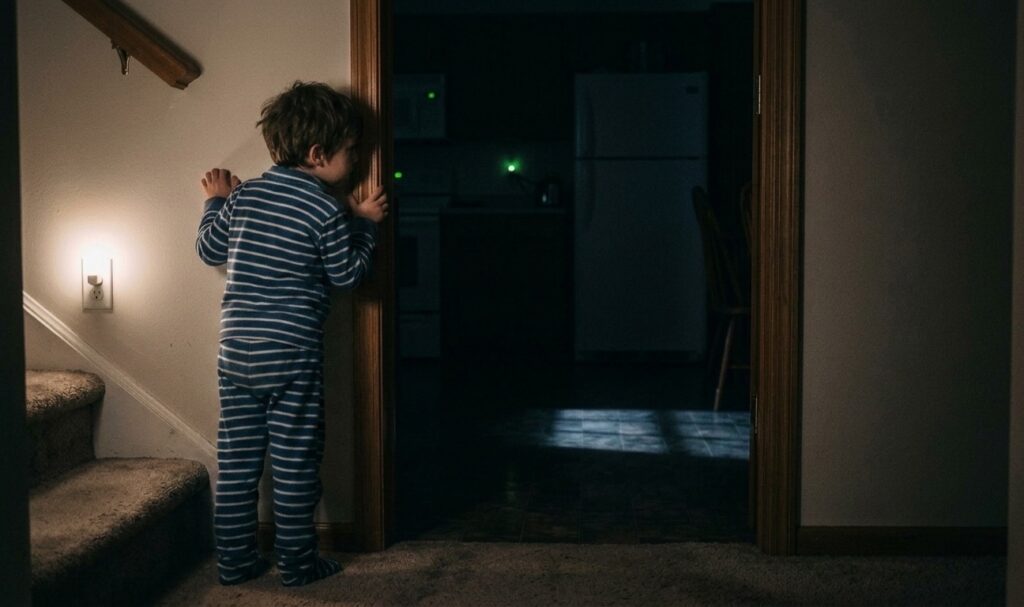
My friend once told me about her five-year-old son, who took nearly two hours to get a sip of water.
It was nighttime, and everyone was upstairs getting ready for bed, but the kitchen was downstairs, and it was dark and scary. Despite many efforts of coaxing and encouragement, each time he tried, he would take a few steps, run back in tears, and say, “I can’t do it”. Through the CCTV, my friend watched as, after many failed attempts, he slowly walked to the kitchen, and was constantly whispering to himself, “When I am afraid, I will put my trust in You. When I am afraid, I will put my trust in You” (Psalm 56:3)
“It would have been easy to go down and do it for him,” she told me, “But I wanted him to experience his own faith.”
I learnt so much from that story – parenting spiritually, investing in the long process of children’s learning and independence, but most of all, I learnt what it meant to trust in God.
Trust in God to Do His Will
Do we trust in God enough to obey him even when it’s hard?
I imagine it was hard for my friend’s son to obey in that moment. Many times, he refused — crying, running back, saying, “I can’t do it.” Yet eventually, he did what was asked. Similarly, do we trust in God enough to obey Him and follow through with His commandments even when it’s hard?
I like to call this the “Faith of Proverbs”. The book of Proverbs contains countless rules of wisdom, such as working hard for a better future (Proverbs 10:4), holding our tongues (Proverbs 15:1), or even the importance of choosing good friends (Proverbs 13:20). Proverbial faith provides the promise that when you do good, good things will happen to you and conversely, when you make poor decisions, bad things will happen to you.
Acting upon these biblical principles, we see in the Bible is trusting in God’s wisdom and instruction to guide our lives. Yet, obedience can be hard. It’s working when you don’t feel like it, giving when you have little left, resisting when temptation whispers loudest, and showing grace when anger feels deserved. Yet we do it — not because it’s easy, but because God asks it of us, and He, who knows all things, knows what is best for us.
“For My thoughts are not your thoughts, nor are your ways My ways,” declares the Lord. “For as the heavens are higher than the earth, so are My ways higher than your ways and My thoughts than your thoughts.” (Isaiah 55:8-9).
Trust in God to Do
Do we trust in God enough to ask, believing that He’s real, present, and powerful?
I believe the most inspiring part of my friend’s story is that, in her son’s fear and distress, he reached out to God and held on to the words of the Bible. God was real to him. Is God real to us? Do we trust in God enough to reach out to Him? It’s one thing to act on our faith; it’s another thing to develop a relationship with God.
In her book, “Cindy Colley on Homeschooling, 77 Things You Need to Know”, Cindy Colley shared a story of her daughter that highlighted to me how real one’s faith can be. Her daughter was about eighteen months old when she was struggling to climb up on a swing. Cindy was hiding away, but peeking to see if she would succeed. With great effort (and the use of a stool), her daughter finally positioned herself and her doll on the swing that was much too high for her. However, she slowly realised that she wouldn’t make the swing move unless someone pushed her, then she heard her daughter say softly, “Okay, Jesus… push me now.”
Jesus called us to be like little children (Luke 18:17), not just because they believe wholeheartedly, but because they are fully dependent. When we fail to pray, we quietly declare that time, money and talent are enough, instead of depending on God. Jesus Himself modelled that dependence — He often withdrew to pray, showing that His strength came from communion with the Father (Luke 5:16).
Prayer is the key to our relationship with God, and hence why I believe this would be the “Faith of Psalms”. The Psalms are filled with that kind of faith — raw, unfiltered, and deeply relational. The psalmists didn’t hide their fear, doubt, or even frustration; yet they always returned to trust. This is faith that breathes — it cries, laments, rejoices, repents, and rests — all in the presence of God.
Do we have that same kind of faith — one so real that we speak aloud to a God we cannot see, pour out our deepest desires and fears, and ask for things that feel too bold to utter? Yet we ask anyway, believing that “God is able to do far more abundantly beyond all that we ask or think” (Ephesians 3:20).
Trust in God
Do we trust in God to be enough when the answer to our prayer is no?
I’m happy to report that the story of my friend’s son got a happy ending. He faced his fears, went down the stairs, turned on the lights, and got his water in the end. However, not all stories end that way. The first step was to trust in God enough to do things we may not necessarily like or understand; the second step is to trust in God enough to ask, believing that God will act. However, what if God doesn’t?
Sometimes we can pray and pray, and God’s answer is no.
If you have even parented little children, you would know that their least favourite word is “no”, and it is always followed up by their favourite word “why?”. Earlier, I mentioned a “Faith of Proverbs” — a faith rooted in biblical principles for living well. These truths are good and wise, but if we hold to them without balance, they can quietly turn into a sense of entitlement, leaving us confused when life doesn’t unfold the way we expect. God, I did everything right. Why is this happening to me?
You attempt to use God’s word and the knowledge of His ways to engineer favourable outcomes, whatever the circumstances of your life may be, to your desired end. But God works in His own ways and time. Proverbs teaches how life generally works; Job and Ecclesiastes remind us that life does not always work that way. They remind us that you can do all the good in the world, and still, life may not be fair; you can work as hard as you want, and still, be forgotten; you can have all the riches in the world, and still, not find joy.
The question arises then, why do we do God’s commandments if the outcome isn’t certain? This is the “Faith of Job & Ecclesiastes”. It’s where you aren’t believing in God for a particular outcome, you just trust in God.
My daughter is almost three, and she is terrified of fireworks. Even the faintest popping sound makes her cry and run straight into my arms or my husband’s. She clings tightly and buries her face in our shoulders.
It reminds me of Psalm 131:1-2, LORD, my heart is not proud, nor my eyes arrogant; Nor do I involve myself in great matters, Or in things too difficult for me. Surely I have composed and quieted my soul; Like a weaned child rests against his mother, My soul is like a weaned child within me.
When my child is hurt, afraid, or overwhelmed, she comes to me. I can’t stop the bleeding, or instantly heal her fever in the hospital, or take away the sting of pain. Her tears still fall. The fear doesn’t magically disappear. Yet she is calmed — not because the problem is solved, but because I am near. Presence itself becomes comfort. That is the picture the Psalm gives us: not a child who has everything explained, but a child who rests because they trust the one who holds them.
Do we run to God like that? Do we cling to God for comfort? Is His nearness enough? Psalm 73:28, But as for me, the nearness of God is good for me; I have made the Lord God my refuge, that I may tell of all Your works.
Therefore, this is the highest level of trust- not believing that everything will work out perfectly, and if it doesn’t, quote “God has a Plan”, but believing that no matter what happens, even if things do not work out, even if God forbid, our worst fears come true, we have God and He’s enough. In whatever state, we will still serve Him, glorify Him, and invite people into His Kingdom, trusting in God.
Like a child whispering in the dark, “When I am afraid, I will put my trust in You.”